
Trace Former Owners in Pleasants County Property Records
Tracing former owners in Pleasants County property records means working backward from a recorded grantee. Check how that person acquired the parcel next. Track each instrument in its own row. Carry the book/page and legal description forward every time. When two entries disagree, stop and resolve the parcel before stepping back to an earlier name.
| Transfer date | Grantor → Grantee | Deed type | Book/Page |
|---|---|---|---|
| Latest located | From the newest recorded instrument | Read the Clerk's type label | Record actual reference |
| Prior transfer | Search latest grantor as earlier grantee | Compare legal description | Record earlier reference |
| Earlier chain | Repeat with each confirmed party | Check related plat or estate filing | Record each instrument |
A Pleasants County assessment card can supply the current owner of record, the parcel key, the legal description, and the Book/Page. The Clerk instrument supplies the written transfer itself. Together they give a stronger starting point than a street address alone.
Move Back Through Pleasants County Deed Records
The Pleasants County Clerk IDX lists GRANTOR and GRANTEE roles. It also offers DIRECT and REVERSE search directions. Search the current grantee first. Open the deed and note its grantor and source-of-title reference. Then search that earlier grantor as a grantee. Repeat the process, and check the parcel description and Book/Page at each step. A Reverse result may reveal a related index path. However, the public interface does not define it as a full title-chain service, so verify each instrument yourself.
IDX result fields include Date, Document, Book Page, Pages, Name, Cross Date, and Instrument. Pages is the length of that record, not a count of former owners. Keep the date, parties, document type, book/page, and legal text in every row. A tract name may change. When it does, search deeds and deed-with-plat entries under the relevant lot or addition.
The Pleasants County Clerk deed index exposes its roles, date controls, and result columns.

Use the index to locate a reference. Then ask the Clerk whether the full image is online or requires another access route.
Check the Pleasants County Former-Owner Index Range
The County Clerk's public pages do not state the earliest online deed year. They also do not state an image cutover. The IDX date picker defaults to January 1900. That is not proof records begin in 1900. A search that returns no older deed should raise a coverage question. It does not mean the chain ends there.
Ask the Clerk for the earliest online index and the earliest image. Ask about the earliest deed book, older plat books, the vault index, and the microfilm procedure. The interface offers Index Search, Image Search, and Vault Indexes Search. The public material does not say which years each covers. Ask whether a courthouse terminal is needed. Ask whether a staff lookup is available, and what plain or certified copies cost.
How Far the Pleasants County Owner Chain Goes
The Pleasants County chain may reach beyond the online index. The county was formed in 1851 from Wood, Ritchie, and Tyler counties. The earlier instrument may sit in a predecessor county. That county held jurisdiction at the time. St. Marys itself began in 1849, so its earliest town lots predate the new county. Do not treat 1851 as the first owner. Follow the location backward into the right predecessor record set.
The West Virginia Archives finding aid covers Pleasants Circuit Clerk material. It lists cases from the 1850s onward. Some files are marked "Contains Plat." Some relate to St. Marys, Riggs Addition, churches, oil companies, and the New York Petroleum Company. A historic case can name an old lot or party. The deed index is not searchable online.
The State Archives finding aid identifies the cases and plat notes.
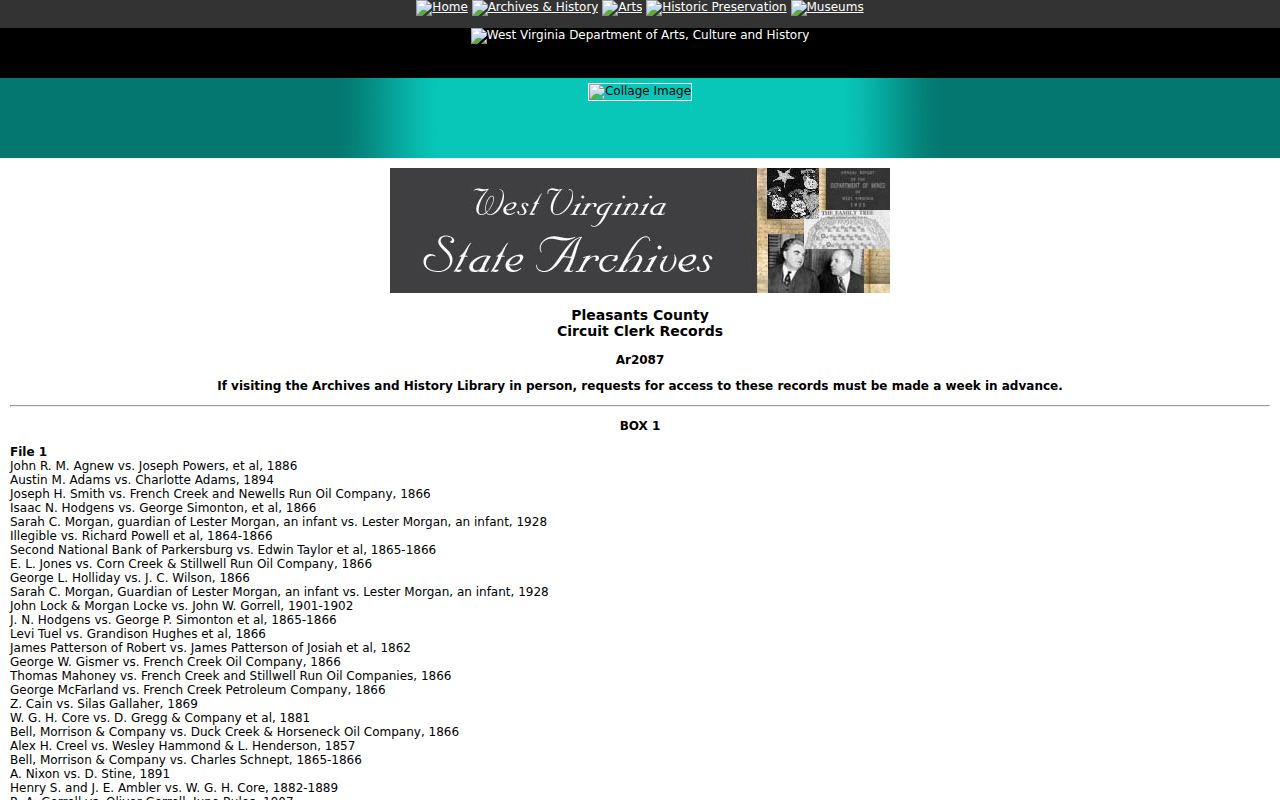
Use the case title as a lead, and confirm access to the underlying file with the Archives.
Match Pleasants County Book and Parcel References
A backward chain can drift to another lot if the description goes unchecked. Compare the deed's grantor and grantee. Check Book/Page, acreage, lot or tract, map references, and any attached plat. The assessment card's PID uses county, district, map, parcel, and suffix. The card may also show deeded and calculated acres, so preserve both values. A deed can transfer partial interests or multiple parcels. It can also convey mineral rights separately from the surface.
St. Marys deeds may name Barkwill Addition, an original numbered lot, or a street form such as SECOND rather than the current E-911 2ND. Split that at "or": St. Marys deeds may name Barkwill Addition. They may also cite an original numbered lot or a street form such as SECOND rather than the current E-911 2ND. Fairplains Addition and Fairview Addition appear in a 2026 transfer report. The report carries district, map, and parcel clues. Treat each name as a search key. Then verify it in a County Clerk deed or plat.
- Grantor
- The party who conveyed the stated interest.
- Grantee
- The party who received that interest.
- Chain of title
- A sequence of recorded instruments used to trace earlier ownership claims.
- Reverse search
- A portal direction label whose behavior should be checked against the result.
- Book/Page
- The clerk reference for an instrument, not the number of transfers.
Search Historic Addresses in Pleasants County Owner Records
Older Pleasants County deeds often skip the modern street number entirely. A sample card shows why spelling matters. It lists “213 SECOND ST” as the physical address. But “213 2ND ST SAINT MARYS WV 26170” is the E-911 address. Search both spellings. Try SECOND and 2ND. Then try ST MARYS and SAINT MARYS. Property records from different eras use different conventions.
When a deed names an addition, a numbered lot, a river tract, a road, a railroad, a church, or a company, search that term. Then match it against the tax map. A mailing address will not locate a parcel. It can point to a prior owner or lag years behind a conveyance. Rely on the PID, the legal description, and the instrument reference. Together they tie old text to the current map. St. Marys map 06-0004 labels Barkwill Addition, a school, a cemetery, original lot lines, and roads. That gives a house-history search local anchors.
Follow Estate Transfers in Pleasants County Owner Records
Death or trust ownership can interrupt a simple grantor-to-grantee sequence. The Pleasants IDX includes Will, Fiduciary Record, Fiduciary Record Out of County, Inventory, Settlement, Ancillary Administration, Small Estate Affidavit, Estate Release, Transfer on Death Deed, and Revocation of TOD. Search the former owner under the deceased role where available, then look for an executor, administrator, trustee, surviving spouse, or heir in related entries.
A probate record can establish authority or explain a transfer, but identify the deed, fiduciary conveyance, or court-authorized sale that reaches the parcel. Estates at the County Clerk are by appointment. Death certificates are separate vital records, with public access periods described in West Virginia Code §16-5-27. The public death index or obituary can help identify a person, but it is not the land transfer.
Use Pleasants County History in Former-Owner Research
Local history sources fill gaps that deed records leave open. The library's family information collection and the St. Marys Oracle and Pleasants County Leader archives can help. They may surface an earlier street name or a former resident. An obituary or a company reference can turn up too. The library confirms the collections hold these materials, though the exact years available vary. Ask staff about a specific date range before planning a search.
The county Historical Society's history project and picture index add context. So do the WVGenWeb cemetery list and the State Archives guide. A cemetery listing can tie an owner of record to a community. A news item can do the same. The title trail still rests on the deed. It can also rest on a probate transfer or a court record. These sources earn their keep when the online chain hits a spelling change. They also help when the description predates searchable addresses. The library services page lists the local-history collection and newspaper archives.
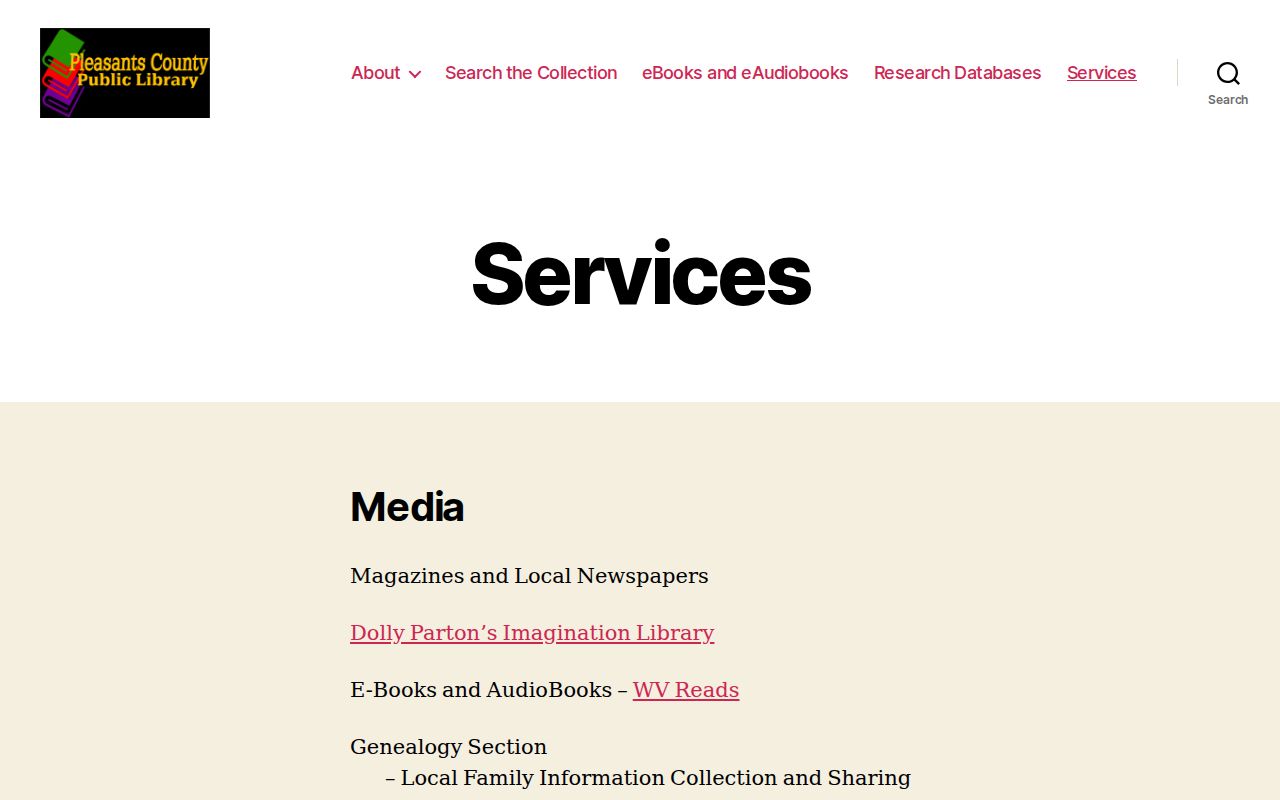
Ask for the relevant newspaper years up front. Use any names or locations you find as leads for the Clerk’s older deed books.
Request Older Pleasants County Deed Records
When the portal runs dry, contact the Pleasants County Clerk. Bring the current PID. Bring older owner names, approximate dates, the addition or lot, and the latest book and page you have. Ask whether the next stop is a bound deed book. It might instead be a vault index, microfilm, or an Archives file. If a court case contains a plat, direct that request elsewhere. The Circuit Clerk or the State Archives handles it, not another deed index search.
West Virginia Code §29B-1-3 grants inspection and copy rights for public records, subject to exceptions. Send the custodian a focused request naming the record and the format you want. Copy prices and response times come from the Clerk. Get current terms directly from the office. If the chain supports a legal transaction, ask for a certified copy.
Coverage question. Pleasants County has no verified online cutoff year. Ask the Clerk where the older index, image, and deed books begin before treating a gap as final.